
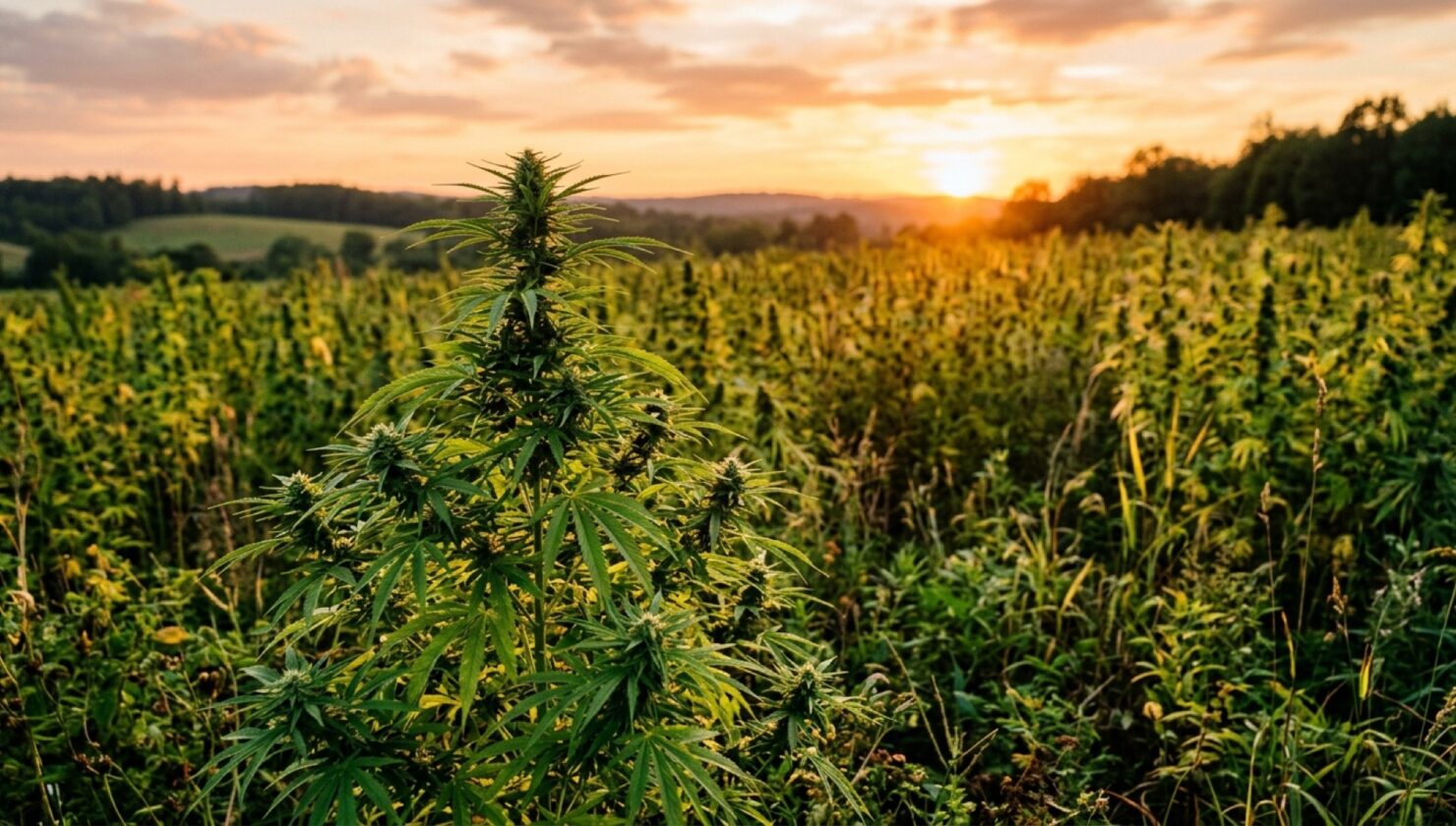
The Bad Actors Who Hijacked Hemp Are Now Its Biggest Threat — and Legitimate Operators Are Caught in the Crossfire
By Morgan Ellis | The Grey Zone | May 1, 2026
When Congress passed the 2018 Farm Bill, the pitch was simple: hemp is an agricultural commodity, not a drug. The 0.3% delta-9 THC threshold — written into statute to separate hemp from marijuana — was meant to mark a ceiling, not an opportunity. A compliance line. You stay below it, you’re legal.
You know what happened next.
Within two years, the market figured out that “0.3% delta-9 by dry weight” was a number that could be gamed. Hemp-derived delta-8 THC, synthesized from CBD through an isomerization process, flooded the market. Then came delta-10. Then HHC. Then THCA flower — which technically tests within the legal threshold in its raw form but converts to psychoactive delta-9 when heated. Then high-milligram delta-9 gummies, technically legal because they’re heavy enough that 10mg of THC clocks in at 0.29% by weight.
Each of these products exists because a lawyer or a chemist found a way to read the Farm Bill in a way that produces an intoxicating product while staying on the right side of a single technical definition. Entrepreneurial, sure. Also exactly the kind of thing that gets a statute rewritten.
What the Original Intent Actually Was
The Hemp Farming Act, championed by then-Senator Mitch McConnell, was built on a straightforward agricultural premise: restore a crop that had been prohibited since 1937. Hemp has thousands of industrial uses — fiber, seeds, construction materials, animal feed. CBD wellness products were an early success story. The intent was not to create a new class of psychoactive consumer products sold at gas stations with cartoon packaging.
That’s not a political opinion. That’s what the sponsors said at the time.
The USDA has published guidance. The DEA has issued multiple letters and memos. The FDA has signaled it views many hemp-derived intoxicating products as requiring regulatory oversight. None of it has fully stuck, because the statute is what the statute is, and the statute says hemp is legal if it’s under 0.3% delta-9 THC by dry weight.
The enforcement gap is real. And the bad actors — the operations flooding convenience stores and online marketplaces with unregulated, untested intoxicating products — have been living in it for five years.
The Legitimate Industry Is Collateral Damage
Here’s the problem with grey zones: when regulators and legislators finally act, they rarely aim with precision.
The hemp industry as a whole — CBD wellness brands, textile processors, seed oil producers, farmers who actually grow hemp as a crop — is now at risk of getting caught in a regulatory backlash aimed at delta-8 vape cartridges and high-dose gummies. State legislatures are already moving. Missouri signed HB2641 in April, banning intoxicating hemp products effective this fall. More than a dozen other states have enacted or are advancing similar restrictions.
The irony is that most of the legitimate hemp operators have been warning about this for years. Established CBD brands with third-party testing, transparent labeling, and age-gated sales have watched the grey-market operators undercut them on price and visibility — and now they’re watching the legislative backlash threaten their businesses too.
A hemp textile company and a delta-8 gummy operation share a legal category: both are “hemp” under federal law. When the backlash comes, the law often doesn’t distinguish.
Where Trump’s Push Fits In
President Trump posted this week calling on Congress to loosen federal restrictions on hemp-derived CBD and other cannabinoids, calling CBD products life-changing for millions of Americans. The sentiment is broadly popular and not wrong — CBD has real therapeutic applications for a significant number of users.
But the timing is complicated. Congress is being asked, simultaneously, to loosen restrictions on hemp cannabinoids and to close the loophole that created the intoxicating hemp grey market. Those two things are not cleanly separable when the statute currently treats them the same way.
What legitimate CBD and hemp wellness advocates actually need isn’t just looser restrictions — it’s clearer restrictions. A framework that explicitly protects non-intoxicating hemp products and hemp’s agricultural uses while giving regulators the authority to shut down the synthetic cannabinoid pipeline. The Farm Bill extension has been kicking the can for two years. What’s needed now is a rewrite, not another extension.
The THCA Problem Nobody Wants to Address
THCA flower deserves its own paragraph because it’s the most acute current problem and the least discussed.
THCA is the acid precursor to THC. In raw cannabis, most THC exists as THCA. When you heat it — smoke it, vaporize it — it converts to delta-9 THC at roughly a 1:1 ratio. A THCA hemp flower product that tests at 0.2% delta-9 by dry weight can deliver the same experience as marijuana when consumed.
Current federal law tests hemp before processing, meaning THCA flower frequently passes the 0.3% delta-9 threshold and qualifies as legal hemp. The DEA has taken the position that THCA counts toward total THC for hemp compliance purposes, and that high-THCA hemp products are therefore illegal. Multiple hemp companies have received warning letters.
But that position hasn’t been litigated to finality. No federal court has definitively ruled on it. The statute is silent on THCA. And in the meantime, THCA hemp flower is being sold openly in states where marijuana remains prohibited — including several states where hemp retailers have already been raided and had product seized, only to continue operating after the legal dust settled inconclusively.
This is a textbook grey zone. The law doesn’t clearly say it’s legal. The enforcement doesn’t clearly say it’s illegal. Retailers operating in this space are taking a real legal risk, and many of them know it.
What Retailers and Consumers Should Actually Know
If you’re a retailer: your risk profile in this space is not static. State legislatures are moving faster than Congress, and the patchwork is becoming increasingly difficult to track. Missouri’s ban is the latest, not the last. If you’re in a state that hasn’t acted yet, that doesn’t mean you’re safe — it means you’re in a state that hasn’t acted yet.
Get a compliance review. Understand the difference between products that are genuinely defensible under current law and products that rely on legal theories that haven’t survived serious challenge. THCA flower, in particular, carries DEA enforcement risk that many retailers are underestimating.
If you’re a consumer: “hemp-derived” on a label doesn’t tell you much. A hemp-derived product can range from a topical CBD lotion with no psychoactive effect to a high-potency THCA vape cartridge that delivers an experience identical to marijuana. The 2018 Farm Bill created a category, not a safety standard. Testing standards, potency accuracy, contamination screening — none of that is federally required for hemp products the way it would be for pharmaceuticals or even food.
Buy from operations that publish third-party certificates of analysis. Ask what testing standard they use. Know what state you’re in and what your state has or hasn’t regulated.
The Clock Is Running
The window for the hemp industry to get ahead of this is closing. Every month that unregulated intoxicating hemp products stay in gas stations and online storefronts is another month that legislators in more states have to point to as evidence that the industry can’t police itself.
The legitimate players — the CBD wellness brands, the fiber and seed farmers, the hemp food producers — have built something real on the back of the 2018 Farm Bill. The bad actors are burning it down around them, and the fire is spreading.
Congress needs to act. Not another extension. A rewrite. And the hemp industry needs to be at the table asking for it, rather than waiting for a law that solves nothing for the operations that were always trying to do it right.
Morgan Ellis is a former compliance consultant and the hemp and regulatory reporter for CannabisInquirer.com. The Grey Zone publishes every Friday.


Responses