
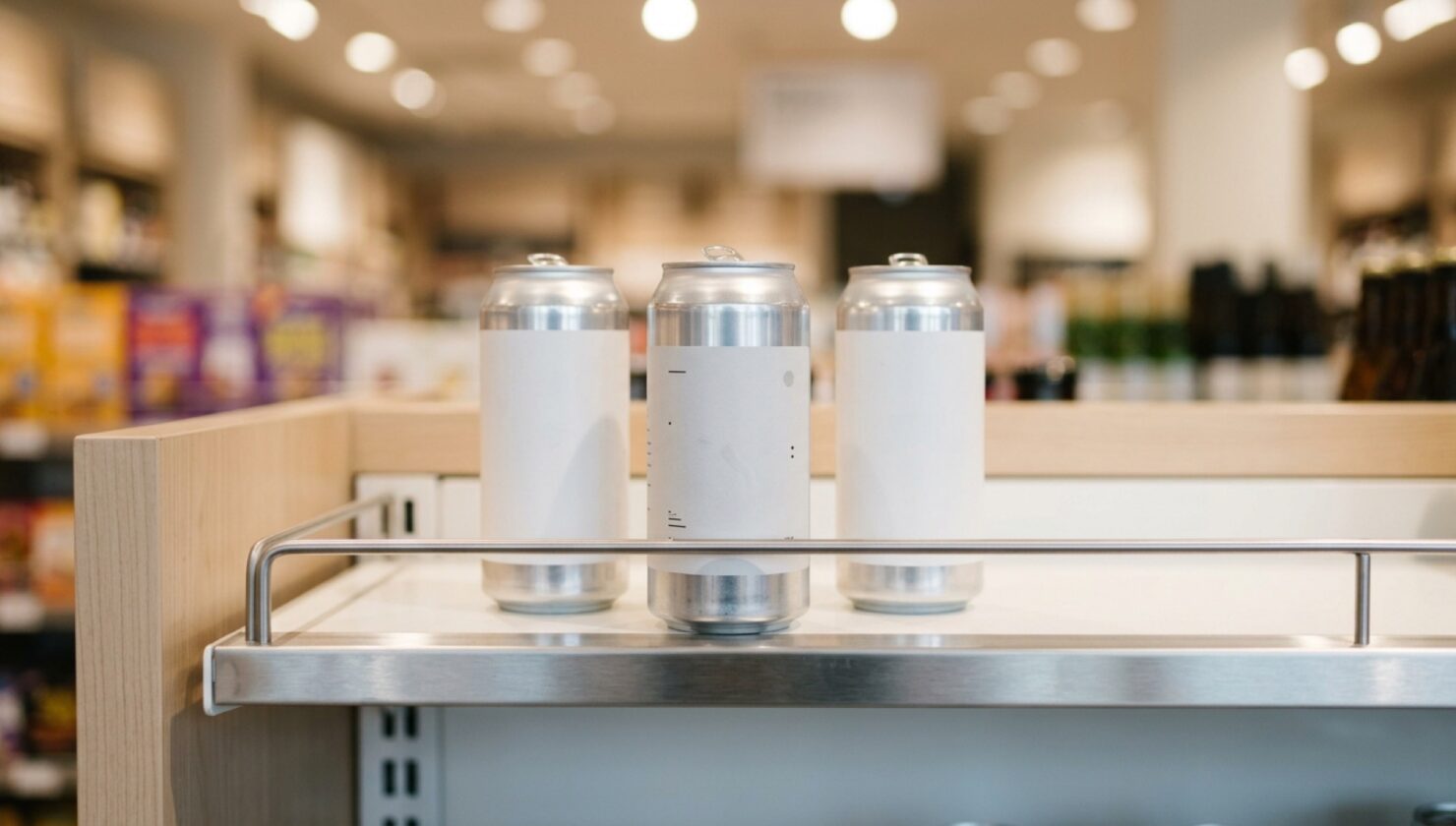
Target Is Putting Hemp THC Drinks on 300+ Shelves — Right as Washington Moves to Kill the Category
Target is rolling hemp-derived THC beverages into more than 300 stores across Florida, Texas, and Illinois — a bold retail expansion that is arriving at the single worst political moment the intoxicating hemp industry has ever faced.
The timing is striking enough to raise an obvious question: does the nation’s sixth-largest retailer know something the rest of the industry doesn’t?
A Major Retailer Moves While Washington Signals a Crackdown
Within the last 24 hours, two stories landed in close proximity that, taken together, describe a category in a very precarious position.
The first: Target is stocking hemp THC drinks at hundreds of stores in three of the country’s largest markets. The products, which are derived from hemp and contain delta-9 THC within the 0.3% dry-weight limit that the 2018 Farm Bill nominally allows, have quietly become one of the fastest-growing segments in beverage retail. Brands like Cycling Frog, Cann, and Wynk have built real consumer followings, and their presence in mainstream grocery and big-box stores represents the mainstreaming of a category that launched in smoke shops and cannabis dispensaries.
The second story: The White House is zeroing in on exactly these products. The Trump administration’s 2026 National Drug Control Strategy calls out intoxicating hemp explicitly, framing synthetic and lab-derived cannabinoids as a regulatory loophole that needs to be closed. Meanwhile, the DEA reiterated this week that tetrahydrocannabinols produced through chemical conversion — even when sourced from hemp — are not compliant with the Farm Bill and should be treated as controlled substances under federal law.
“To clarify further, tetrahydrocannabinols produced through chemical conversion, even when hemp-derived, are considered synthetically produced for purposes of the Controlled Substances Act,” the DEA stated.
The Legal Fault Line the Industry Has Been Sitting On
The legal architecture of the hemp THC beverage market has always been fragile. The 2018 Farm Bill legalized hemp and its derivatives, and some manufacturers began producing intoxicating delta-9 products by extracting CBD from hemp and then chemically converting it to THC — a process that allows for high-potency end products that technically remain under the dry-weight threshold.
The DEA’s position — now being reiterated more loudly than ever — is that this conversion process makes the resulting cannabinoids synthetic. If that interpretation holds in court, or if Congress or the administration acts before the Farm Bill is reauthorized, the entire hemp THC beverage category could disappear from retail shelves overnight.
That is not a hypothetical. Industry observers have estimated a potential federal crackdown timeline as short as six months.
So Why Is Target Expanding Now?
There are at least two ways to read Target’s move.
The charitable read: Target’s buyers and legal team believe the category will survive regulatory scrutiny — that the DEA’s position is a posture, not a prelude to enforcement, and that the Farm Bill reauthorization process will produce a workable framework for low-dose hemp THC beverages. Under this reading, Target is racing to establish shelf presence and consumer loyalty before competitors can.
The cynical read: Target is moving quickly because it can — large retailers often operate under the assumption that federal enforcement will target manufacturers and distributors first, and that pulling products in response to regulatory pressure is easier than never stocking them at all. If the ban comes, Target walks. In the meantime, it captures market share.
There is also a third possibility, and it’s the one the industry is paying close attention to: Target may have received signals, through its lobbyists or legal advisors, that the most likely regulatory outcome involves tighter labeling and dosage caps — not an outright ban. A 5mg per-serving cap with clear age-gating would be survivable for major beverage brands. An outright prohibition would not.
What It Means for the Market
Target’s expansion matters beyond the retail footprint itself. When a major national chain stocks a product category, it signals to the broader consumer market that the products are legitimate — and it makes regulatory action more politically costly. Pulling hemp THC drinks from Target shelves is a different political calculation than clearing them from independent smoke shops.
For hemp brands, the Target placement is a lifeline and a pressure point simultaneously. More distribution means more revenue and survival runway. It also means more visibility at exactly the moment federal regulators are looking for reasons to act.
For consumers in Florida, Texas, and Illinois, the practical implication is straightforward: these products are about to become a lot easier to find. Whether they’ll still be available six months from now is a question no one at Target — or in Washington — seems prepared to answer clearly.
The intoxicating hemp category has spent years operating in a regulatory gray zone. That zone is getting narrower. The fact that the country’s sixth-largest retailer just stepped into it anyway tells you something about how much money is now at stake.
Sources: High Times; The Hill; DEA public statement via NORML




Responses