
Pesticide Anxiety Is Reshaping the Cannabis Market — and Operators Who Ignore It Are Falling Behind
The cannabis industry has spent the better part of a decade chasing volume — more stores, more SKUs, more states. Now, a growing body of consumer research is pointing toward a different kind of pressure: shoppers want to know what’s in the product, and they’re increasingly skeptical that operators are being straight with them.
A study published this week by the Cannabis Industry Journal puts numbers to a trend that premium dispensary operators have observed anecdotally for years. Consumer concern over pesticide contamination in cannabis products is rising, and it’s no longer confined to health-conscious niche buyers. It’s going mainstream. According to the research, a meaningful share of cannabis consumers now factor product cleanliness — specifically pesticide exposure — into their purchasing decisions. That shift has implications that run from the grow room all the way to the balance sheet.
The timing matters. Cannabis stocks have been stuck in a prolonged holding pattern. Industry tracker New Cannabis Ventures noted this past week that equities across the sector are “going nowhere quickly,” with no catalyst strong enough to break the malaise. For publicly traded multistate operators and small-cap cultivators alike, that’s a frustrating backdrop. The obvious revenue levers — federal legalization, Schedule III rescheduling, interstate commerce — remain either stalled or moving far slower than investors once hoped.
Against that backdrop, clean product is one of the few market differentiation stories that doesn’t require an act of Congress.
What the Study Found
The Cannabis Industry Journal survey found that pesticide concerns are now among the top product-quality concerns cited by cannabis consumers — a category that has historically been dominated by potency and price. The research doesn’t just affirm that consumers care; it suggests their concern is active, meaning it’s already influencing which brands they choose and which they skip.
That’s a qualitative shift. For years, the working assumption in the industry was that cannabis buyers were largely unresponsive to safety signals — that as long as the THC percentage was high and the price was competitive, most customers would make the purchase. That assumption is becoming less reliable.
The report notes that pesticide concerns have grown as cannabis has become more normalized. Consumers who came to cannabis as wellness or recreational products — not as something obtained in a parking lot — arrive with the same product safety expectations they bring to organic food, dietary supplements, or craft beverages. They want to know the supply chain. They want third-party testing. They want a certificate of analysis they can actually read.
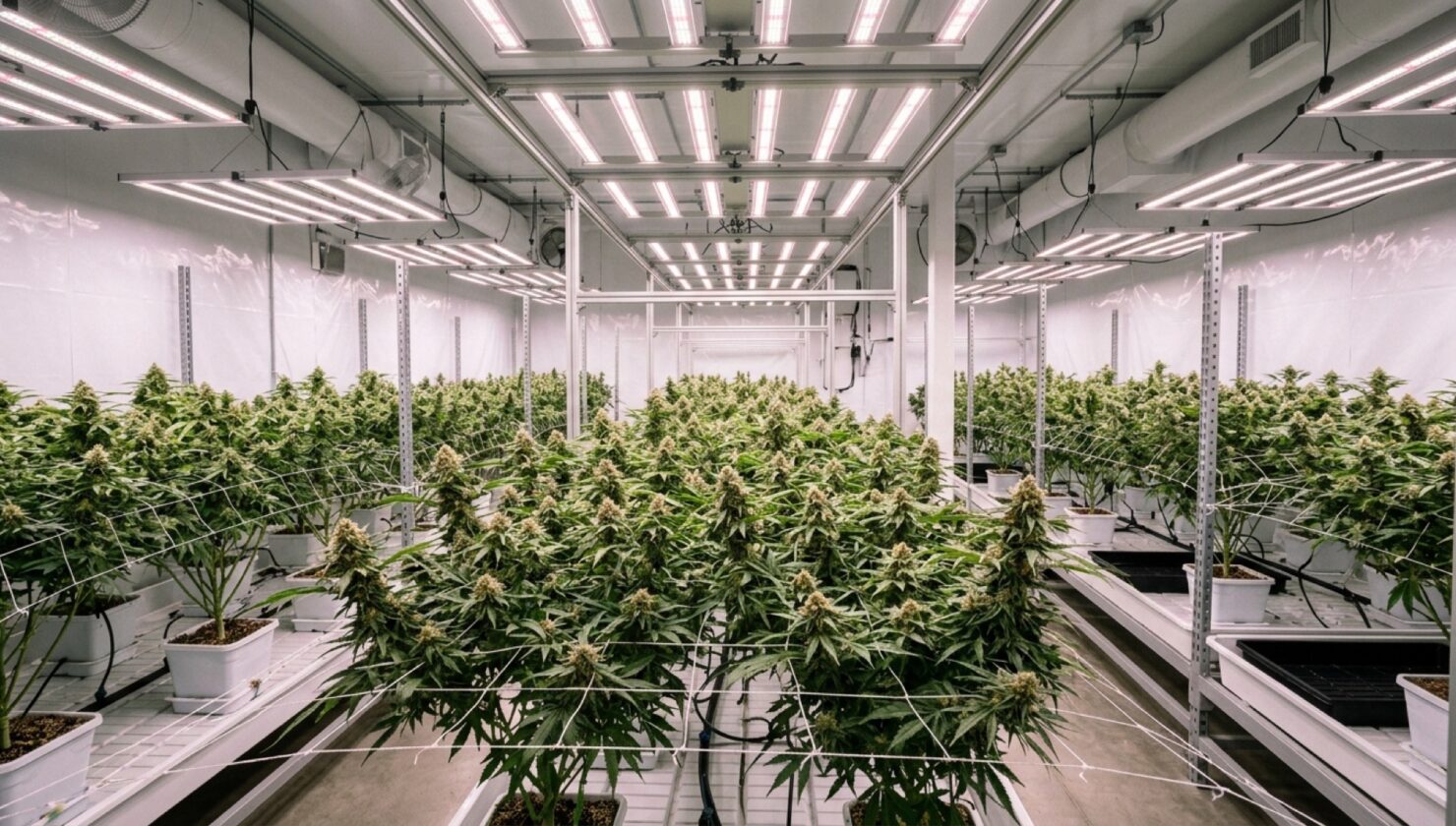
For operators who have invested in clean cultivation practices, regenerative soil programs, or integrated pest management, this is genuinely good news. Those practices carry real costs. They’ve been difficult to price into products in a market where consumers have been trained to expect falling retail prices. A consumer base that actively rewards clean products changes that calculus.
The Business Case for Clean
The market for premium, pesticide-free cannabis has always had a ceiling in a commodity-priced environment. When dispensaries are running BOGO deals on flower and ounces are selling for $60, paying a premium for certified clean inputs is hard to justify at the register — for both the retailer and the consumer.
But that ceiling may be rising. Several dynamics are converging.
First, the normalization of cannabis retail has brought in a different consumer cohort. The shopper walking into a licensed dispensary in Illinois or New Jersey in 2026 looks different from the buyer who drove to a California collective in 2014. Household income tends to be higher, brand awareness is sharper, and prior experience with regulated product markets — wine, specialty food, supplements — shapes expectations. These consumers have navigated “organic” labels and “natural” claims in other aisles; they’re applying the same skepticism here.
Second, regulatory scrutiny on testing standards is tightening in several key markets. A handful of states have increased the frequency of mandatory pesticide testing and broadened the list of compounds that trigger a failed batch. High-profile recalls — when they happen — generate the kind of press coverage that erodes brand trust quickly in an era when dispensary reviews live on Google and Reddit in perpetuity. Operators with clean production pipelines face far less of that tail risk.
Third, the hemp THC category is adding ambient consumer pressure. As intoxicating hemp drinks and edibles compete with licensed cannabis products on gas station shelves and in Target stores, licensed operators have an opportunity to sharpen the safety and testing story. Legal cannabis, properly tested under state oversight, is arguably safer than the loosely regulated hemp market. That’s a comparison brands haven’t leaned into hard enough.
Where Stocks Fit In
The disconnect between improving consumer quality awareness and flat stock performance is worth examining. Cannabis equities remain one of the most structurally handicapped sectors in U.S. markets — trapped by federal banking restrictions, 280E tax exposure, and the inability to uplist to major exchanges. New Cannabis Ventures’ weekly read on the sector this week was characteristically unsentimental: the stocks are going nowhere fast.
For MSOs, that means the path to investor value isn’t being cleared from Washington anytime soon. It has to be built store by store, margin by margin, brand by brand. Clean product certification and transparency programs are relatively low-cost ways to build brand equity, increase basket size on premium lines, and reduce the recall and PR risk that can crater a quarter’s results.
The operators who are already ahead on clean cultivation — and who are communicating that clearly to consumers — are positioning themselves for a marketing story that competitors can’t copy overnight. Growing a clean crop at scale, without the shortcuts, takes time and process discipline. It’s a moat, even if it’s not being treated like one yet.
The Retail Angle
Dispensary buyers are noticing. Several retail chains in mature markets have begun tightening their vendor qualification standards, requiring more granular testing documentation and asking cultivator partners to disclose IPM programs in detail. Category managers who once prioritized price-per-gram are now running quality scorecards.
That’s a shift in purchasing power that flows back to cultivators and brands. Clean-certified product lines are increasingly commanding shelf space on merit, not just price negotiation. In competitive adult-use markets where hundreds of SKUs fight for limited shelf real estate, that’s meaningful leverage.
The consumer study doesn’t capture everything — it can’t tell us how much of a price premium buyers will actually accept versus what they say they’ll accept in a survey. That gap is always real. But the directional signal is consistent with what dispensary operators are observing at the point of sale: given two roughly equivalent products, more consumers are choosing the one with the cleaner label story.
For an industry still searching for its next catalyst, that may be as good a growth signal as any on the board right now.
Caleb Quinn covers cannabis business, investment, and retail for CannabisInquirer.com.



Responses