
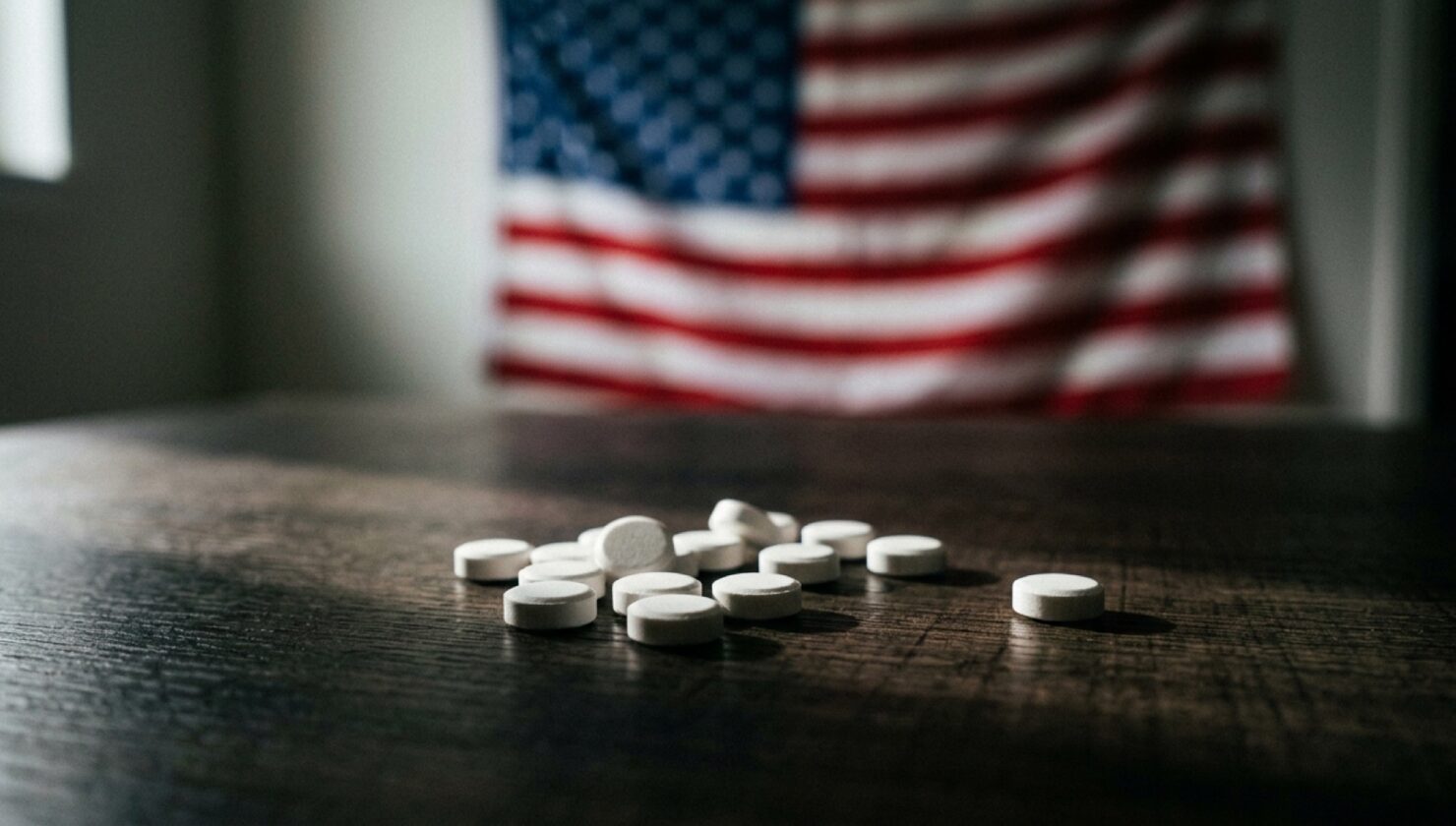
The Trump Administration’s Drug Strategy Is Out. Marijuana Gets Its Own Chapter.
The Office of National Drug Control Policy released the 2026 National Drug Control Strategy last week — the first such document produced under President Trump’s second term — and if you were hoping the federal government had quietly made its peace with legal cannabis, this is not the document for you.
Marijuana is not a footnote in the 2026 strategy. It is not an afterthought tucked between fentanyl statistics and meth seizure numbers. According to reporting from Filter, the new ONDCP strategy is “very concerned about marijuana” in terms that go well beyond the boilerplate drug-war language of prior administrations. That concern now carries the weight of a formal policy framework — and it arrives at a moment when the administration has already begun signaling enforcement pressure on the hemp industry, putting the broader cannabis sector on notice.
What the Strategy Actually Says
The National Drug Control Strategy is the White House’s annual roadmap for federal drug policy, coordinating priorities across the DEA, FDA, DOJ, HHS, and a half-dozen other agencies. Under the Biden administration, successive versions of the document softened their tone on cannabis considerably, in line with the administration’s rhetoric around rescheduling and expungement. The Trump ONDCP is moving in the opposite direction.
While the full text of the 2026 strategy addresses the fentanyl crisis as its primary focus — consistent with Trump’s sustained political emphasis on border security and cartel interdiction — cannabis has been elevated to a level of concern that analysts say is unusual for a document of this type. The strategy reportedly treats marijuana not merely as a gateway concern but as a public health and youth safety issue warranting coordinated federal attention.
That framing matters because the National Drug Control Strategy is not just a mission statement. It shapes budget requests, agency priorities, and enforcement guidance. When ONDCP designates marijuana as a significant concern, it sends a signal to the DEA, federal prosecutors, and grant-funded state and local law enforcement agencies about where resources and attention should flow.
The Hemp Connection
The strategy does not exist in isolation. The Hill reported last week that the Trump administration is actively “zeroing in” on intoxicating hemp — specifically, synthetic hemp products with high THC concentrations, including delta-8, HHC, and other lab-derived cannabinoids that have proliferated since the 2018 Farm Bill created a legal gray zone around hemp-derived compounds.
The DEA reinforced that posture in a statement last week, reiterating that tetrahydrocannabinols produced through chemical conversion — even when starting from hemp — are considered synthetically produced under the Controlled Substances Act and are therefore not protected by the Farm Bill’s hemp carve-out. “To clarify further,” the agency said, “tetrahydrocannabinols produced through chemical conversion, even when hemp-derived, are considered synthetically produced for purposes of the Controlled Substances Act.”
Together, the ONDCP strategy and the DEA’s public posture form a pincer: the strategy provides the policy mandate, and the DEA has now provided the legal theory. What remains to be seen is whether the DOJ translates that theory into enforcement action — and how quickly.
Why This Is Different From Prior Administrations
Trump’s first term was, by most measures, a study in federal non-intervention on cannabis. Despite Jeff Sessions rescinding the Cole Memo in 2018, the DOJ under both Sessions and his successors largely left the state-licensed industry alone. Cannabis companies, particularly multi-state operators, learned to live with federal illegality as a background condition rather than an active threat.
The 2026 strategy suggests a different posture is taking shape. The administration has been explicit about its hostility to intoxicating hemp products — a category that represents billions in annual sales through gas stations, convenience stores, and e-commerce — and that hostility now has a formal policy home. Whether the administration has the enforcement bandwidth to act on that posture, given its stated prioritization of fentanyl and border enforcement, is a legitimate question. But the policy signal is clear.
For the licensed cannabis industry, the implications run in two directions. On one hand, a federal crackdown on intoxicating hemp could benefit licensed operators in legal states, who have long complained that unregulated delta-8 and similar products undercut their businesses without facing equivalent regulatory scrutiny. On the other hand, a White House that views marijuana through a public-health-crisis lens is not one likely to advance rescheduling, banking reform, or any of the other federal policy changes the industry has sought.
The Congressional Landscape
The release of the ONDCP strategy lands at a complicated moment on Capitol Hill. The SAFE Banking Act — which would give cannabis businesses access to conventional banking and financial services — has passed the House multiple times but has never cleared the Senate. With a Republican majority in both chambers and a White House that has now formally elevated marijuana as a drug control concern, prospects for the banking bill or any other cannabis-positive federal legislation look dim in the near term.
Some congressional Republicans have expressed interest in resolving the hemp regulatory question, particularly as agricultural interests in their districts have invested heavily in hemp cultivation and processing. But the 2026 strategy complicates that conversation by framing the hemp problem primarily through an intoxication and youth-access lens rather than an agricultural one — exactly the framing that makes compromise difficult.
What Comes Next
The ONDCP strategy is a directional document, not an enforcement order. The DEA still needs to act; the DOJ still needs to prioritize. But the policy groundwork is now laid, and the combination of a formally skeptical drug strategy and an agency that has publicly restated the illegality of hemp-derived THC compounds represents the most coherent federal anti-cannabis posture in years.
For industry observers, the next data points to watch are DEA enforcement actions against hemp retailers, any formal regulatory guidance from the FDA on hemp-derived cannabinoids, and whether Congress moves to address the hemp regulatory gap in this year’s Farm Bill reauthorization — or punts it again. The 2026 National Drug Control Strategy has made clear where the executive branch stands. The question now is what it intends to do about it.
Ethan Vale covers federal cannabis policy, the DEA, FDA, DOJ, and Congress for CannabisInquirer.com.
Related Stories



Responses