
Hemp THC Drinks Are Having Their Best Year Yet. The Drug Czar Just Put Them in Her Crosshairs.
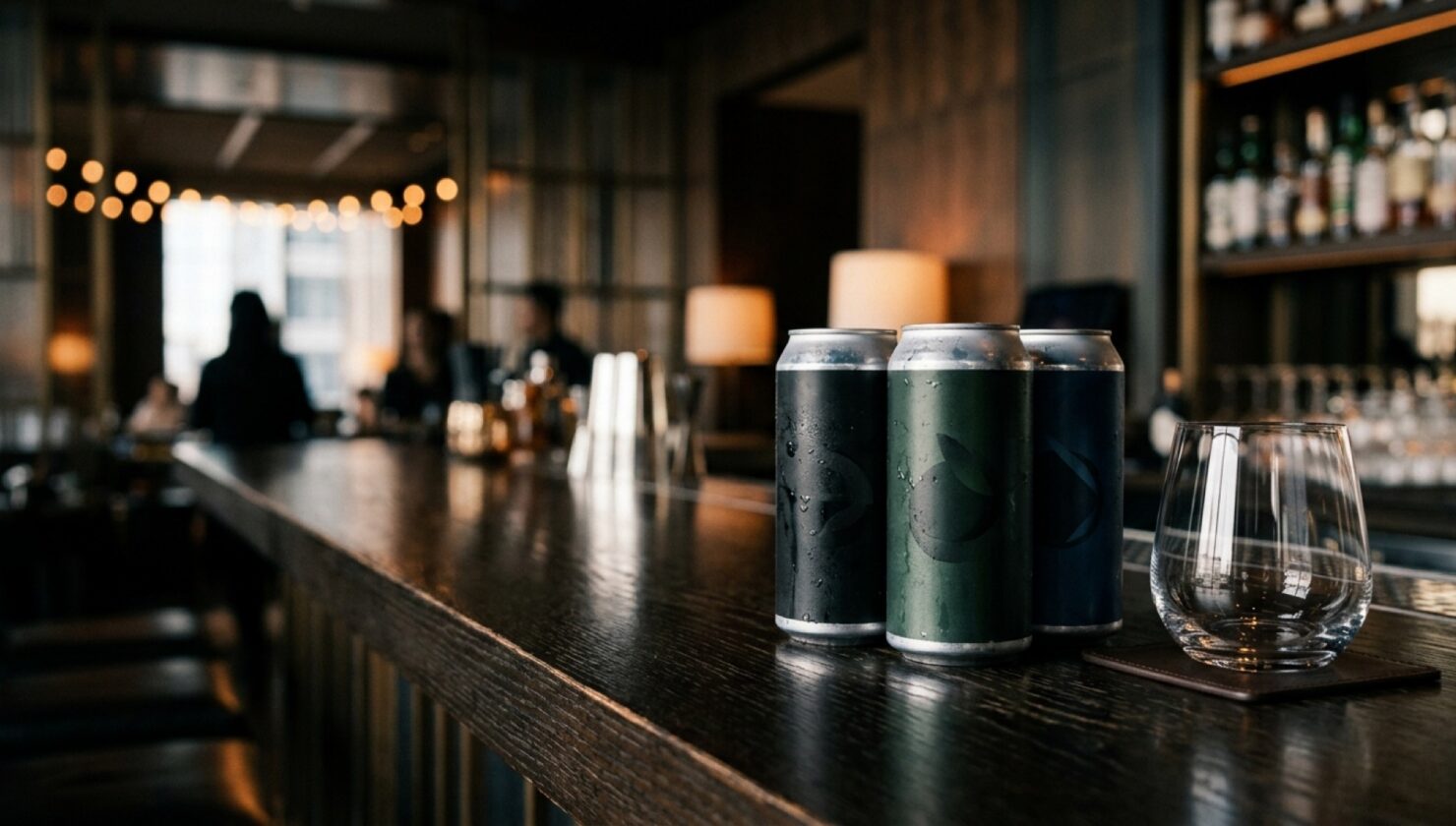
At the Cannabis Cup in New Jersey last week, at least one reviewer reached not for a joint or a pre-roll but for a bottle that pours like a spirit and promises something the cannabis industry has spent years trying to perfect: a buzz that works in fifteen minutes and leaves you feeling normal the next morning.
That product — a hemp-derived THC beverage from Back Market — earned a glowing writeup in High Times, with the reviewer noting it “hits in fifteen minutes, and lets you wake up like you’d had a tea.” The framing wasn’t incidental. The headline explicitly contrasted it against alcohol. That contrast is now the entire marketing thesis of the hemp THC beverage category — and it’s working.
It’s also, depending on who you ask, about to become a significant federal problem.
The Pitch Is Simple. The Science Is Catching Up.
Hemp-derived THC beverages — most formulated with delta-8, delta-9 derived from hemp, or some combination — have quietly become one of the most commercially dynamic sectors in the alternative cannabinoid space. Unlike delta-8 vapes or THCA flower, beverages occupy a uniquely accessible retail niche: they land in liquor stores, convenience stores, and specialty bottle shops in states where dispensary access remains limited or nonexistent. Their pitch to the sober-curious, the alcohol-fatigued, and the health-conscious consumer is direct: all the social lubrication, none of the inflammation, none of the morning-after.
The pharmacological appeal isn’t invented. Alcohol is a toxin; ethanol metabolism generates acetaldehyde, a compound classified as a Group 1 carcinogen. THC, whatever its regulatory complications, doesn’t carry that particular baggage. For a consumer cohort increasingly attentive to wellness — the same people tracking sleep with wearables and avoiding seed oils — the pitch resonates.
And the products themselves have genuinely improved. Early hemp beverage formulations struggled with bioavailability: oil and water don’t mix, and unformulated THC delivered orally was famously unpredictable in onset and duration. Water-soluble emulsion technology has largely solved that problem. Nano-emulsified hemp THC now delivers onset times that approach or match alcohol — fifteen to thirty minutes in many cases — which changes the entire social calculus of cannabis consumption. You can pace yourself the way you’d pace a drink. You can stop when you want to stop.
The Regulatory Ceiling
Here’s what the beverage brands don’t put on their labels: the legal architecture holding this category together is fragile, contested, and increasingly in someone’s political sights.
Hemp-derived THC beverages exist because the 2018 Farm Bill defined hemp as cannabis containing no more than 0.3 percent delta-9 THC by dry weight. Manufacturers found early on that this threshold, written for flower, created an enormous amount of room when applied to liquid. A 12-ounce beverage containing 5 milligrams of delta-9 THC sits well below that 0.3 percent threshold by weight — making it, on paper, federally compliant hemp.
The FDA has never formally blessed that interpretation. The agency’s posture on hemp-derived intoxicants has been one of studied inaction punctuated by occasional warning letters — not a coherent enforcement policy, but enough ambiguity to keep smart operators cautious and well-capitalized legal teams employed.
The Farm Bill expired in 2023. It has been running on extensions ever since. Each extension cycle is a legislative moment when the definition of hemp — and by extension, the fate of the entire hemp THC market — could be rewritten. That hasn’t happened yet. But the political environment has shifted noticeably.
The Drug Czar Weighs In
Earlier this month, ONDCP Director Sara Carter Bailey appeared on Newsmax to discuss the cannabis rescheduling process. She was there to explain Schedule III. She didn’t stay there.
According to reporting from High Times, Bailey pivoted partway through the segment to flag separate concerns: cannabis potency, foreign-grown cannabis, and — notably — hemp THC. She made a point of distinguishing Schedule III, which covers medical and research contexts, from the broader consumer hemp market. The implication was clear: whatever accommodation the administration might be offering to the traditional cannabis industry through rescheduling, hemp THC is not receiving the same consideration.
That’s a significant signal. The ONDCP is not the FDA. It doesn’t write enforcement rules. But it shapes political priorities, and a drug czar who names “hemp THC” specifically in a cable news appearance about rescheduling is telling the industry something about where the administration’s attention is headed.
The hemp industry has spent years arguing that hemp THC and marijuana THC are pharmacologically identical but legally distinct — that the Farm Bill’s definitions, however arbitrary, create real and enforceable differences. That argument works in court filings and regulatory comment letters. It has always been less persuasive to a drug czar on television.
What Beverage Brands Are Watching
For companies in the hemp THC beverage space, the next six to twelve months involve navigating several overlapping risk vectors simultaneously.
First: the Farm Bill. A full reauthorization — rather than another short extension — would give Congress an opportunity to explicitly address hemp-derived intoxicants. The industry is lobbying hard for language that preserves the current delta-9 beverage framework. Anti-hemp forces, including some factions of the licensed cannabis industry who view hemp THC as unlicensed competition, are pushing equally hard for restrictions.
Second: state-level action. Several states have already moved to ban or heavily restrict delta-8, THCA flower, and related products. Hemp THC beverages have so far largely escaped those restrictions — partly because they’re easier to regulate as alcohol-adjacent products through existing beverage frameworks. But that grace period may not last.
Third: FDA. The agency’s long-simmering review of CBD never produced a formal regulatory pathway, which is why CBD is still in a legal gray zone eight years after the Farm Bill passed. Hemp THC could follow the same trajectory — years of inaction followed by a sudden enforcement moment triggered by the wrong news story or a high-profile adverse event.
For now, the category is thriving. The products work better than they used to. The consumer demand is real. At a Cannabis Cup in New Jersey in May 2026, the story worth writing was about a hemp drink that tasted good and delivered a clean, manageable high without a hangover.
Whether that story still has the same ending this time next year is a different question.
Morgan Ellis covers hemp-derived THC, delta-8, THCA, the Farm Bill, and federal cannabis enforcement for CannabisInquirer.com.


Responses