
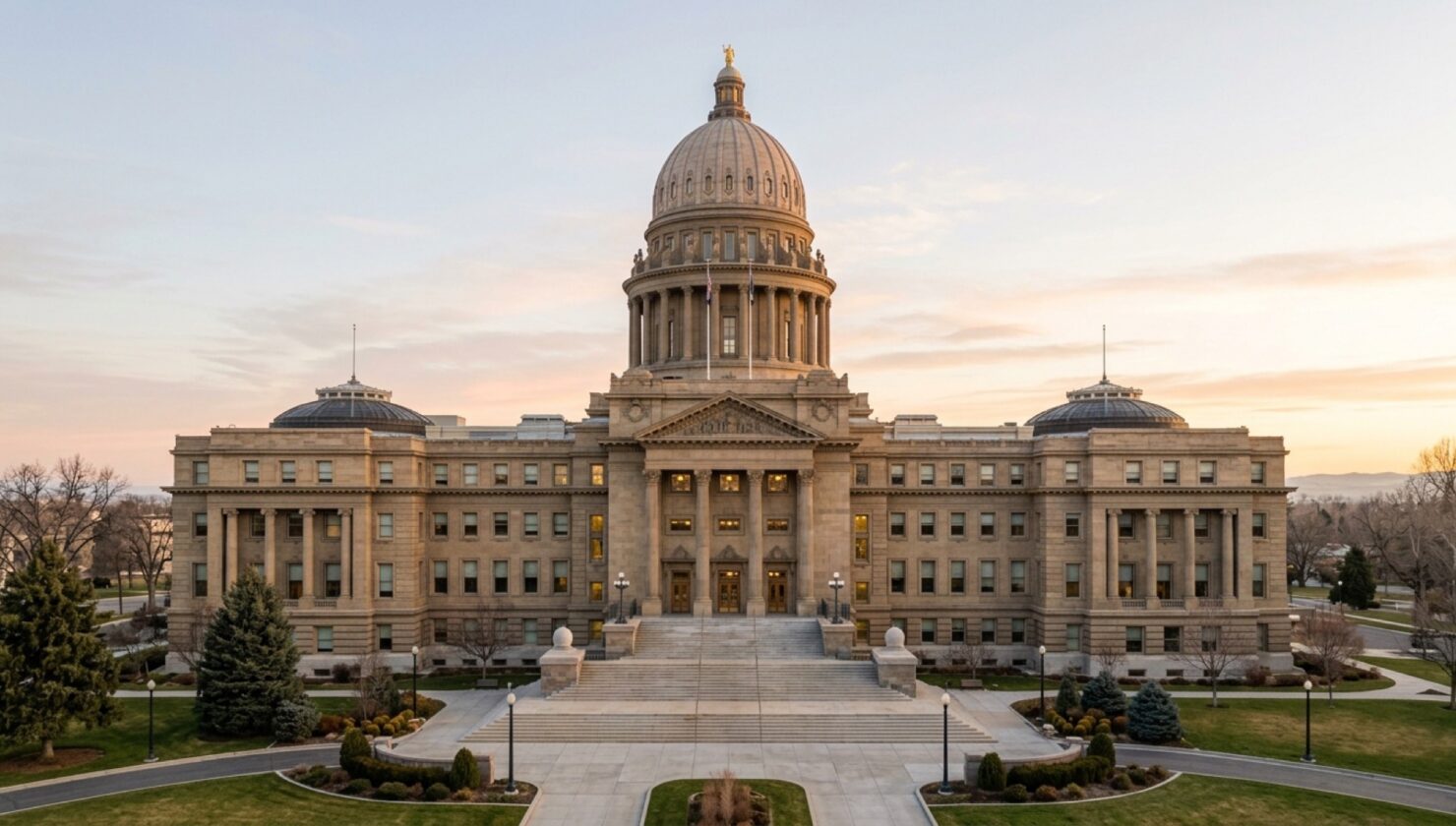
Idaho has spent years being very clear about one thing: you will not eat or inhale a hemp-derived product on their watch. Every neighbor — Oregon, Washington, Montana, Nevada — had made their peace with consumable hemp. Idaho had not. Then on April 2, Governor Brad Little signed H0879, and that changed.
The bill is written in the flattest bureaucratic prose: it “amends existing law to provide for the sale of hemp products intended for human ingestion or inhalation.” Nine words of legal amendment, years of politics behind them. Idaho — the state where hemp CBD retailers were still navigating a ban on consumables as recently as February 2026 — now has a path to legal hemp gummies, tinctures, and inhalables.
This is a bigger deal than the bill’s quiet passage suggests.
What H0879 Actually Does
Prior to H0879, Idaho’s hemp law was essentially a grower’s program — you could cultivate industrial hemp for fiber, seeds, and processing, but the state explicitly barred consumable hemp products from retail sale. This made Idaho an island. Every legal-state neighbor allows hemp-derived CBD, delta-8, delta-9 beverages, and a range of ingestible products under federal Farm Bill definitions.
H0879 amends the Industrial Hemp Act to remove that restriction, creating a legal basis for the retail sale of hemp products intended to be eaten or inhaled. What it doesn’t do, at least as introduced, is establish a full regulatory framework with product testing mandates, THC concentration limits, or shelf labeling requirements comparable to what Oregon or Washington run. That work falls to the Idaho State Department of Agriculture and, eventually, the legislature’s next session.
In other words: the door is open, but the house isn’t finished.
There’s also the 0.4 mg/container THC ceiling. A rule rewrite passed in late 2025 — the same regulatory environment that sparked the HB478 fight — set an extraordinarily low cap on allowable THC per container regardless of product size. H0879 resolves the retail prohibition, but that threshold, if it survives implementation, would effectively exclude almost every functional hemp product on the national market.
Idaho’s hemp retailers and advocates will be watching closely to see whether ISDA implements H0879 with rules that actually allow a viable product market, or treats it as a minimalist concession that keeps the status quo intact through regulatory means.
Who This Affects
Start with the obvious: Idaho consumers who have been driving across the Oregon or Washington border to buy hemp products they can’t get at home. The West has long had free movement of people across state lines, and Idaho residents have been buying delta 8 thc legal status 2026 for years — either traveling out of state or ordering online in a legal gray zone. H0879 creates, for the first time, a state-legal domestic market.
Hemp retailers in adjacent markets — particularly in eastern Oregon and western Montana — will feel the edges of this too. Idaho is a thin market by legal-cannabis standards, but for hemp operators with direct-to-consumer product lines, a new state coming online is new addressable revenue.
For Idaho’s own agricultural community, hemp cultivation was already legal. H0879 doesn’t unlock the plant itself — it unlocks what you can do with it commercially. Processors and value-added manufacturers who have been sitting on the sidelines can now, theoretically, build out a state-legal consumer product line.
That’s the good news. Here’s the complication.
The Federal Deadline Hanging Over All of This
Idaho signed H0879 on April 2. The federal hemp definition changes on November 12, 2026.
Congress rewrote the definition of hemp in late 2025, narrowing what qualifies. Under the new law — effective November 12 — products excluded by the revised definition are no longer considered hemp. They become marijuana under the Controlled Substances Act. That means anything that doesn’t meet the stricter federal criteria becomes federally illegal regardless of what Idaho law says.
The practical effect: the market Idaho just opened for hemp consumables may be significantly smaller by the time the first properly regulated products hit shelves. Any product relying on delta-8, delta-9 in meaningful concentrations, or certain synthesized cannabinoids is likely out of bounds under the federal November 2026 framework. Several states have moved ahead of that deadline, including Tennessee’s 2026 delta-8 and THCA ban, which banned THCA and delta-8 products in early 2026.
Idaho’s hemp retailers will have roughly seven months — at most — to build a market around products that survive both Idaho’s regulatory implementation and the federal definition shift. For a state starting from zero with no retail infrastructure, no established distribution networks, and a USDA-regulated hemp program that has operated purely as an agricultural program, that runway is short.
The timing looks almost deliberately ironic. Or like Idaho finally moved when it calculated the cost of holding the line had become higher than the cost of opening a market that might not last long anyway.
The Direction
This is an expansion. Full stop. Idaho has been the interior West’s holdout on this issue for years, and that posture wasn’t sustainable as consumer demand for hemp products continued to grow nationally.
But it’s a hedged expansion. The bill is narrow. The implementation framework doesn’t exist yet. And the federal November deadline means Idaho’s hemp market may be born into uncertainty about what it’s actually allowed to sell.
Nationally, this is one more state closing the gap between hemp access and the surrounding legal landscape. It’s also a data point that even very conservative state legislatures are finding hemp prohibition politically untenable. HB478 — last year’s effort to ban hemp consumables outright — failed. H0879 passed 53-16 in the House, 24-10 in the Senate.
When a vote is that lopsided in Idaho, on anything related to cannabis-adjacent policy, something has shifted.
What Happens Next
The bill is signed. The effective date is tied to the session law chapter designation, which Idaho typically records at time of enrollment — in this case, April 2.
Next steps are ISDA’s. The department needs to build out retail rules: testing requirements, THC thresholds, labeling standards, retailer licensing. Without those rules, H0879 is legal permission without a regulatory engine.
The Idaho legislature returns next session in January 2027 — well after the November 2026 federal deadline. If ISDA moves slowly, the window between H0879’s signing and the federal definition change may produce little actual market activity. Advocates will be pushing for ISDA to move fast. The department’s track record suggests “deliberate.”
Meanwhile: Idaho’s medical cannabis ballot petition is still active, with a late-April 2026 signature deadline. The Natural Medicine Alliance Idaho and Marijuana Policy Project are in the field collecting signatures for the Idaho Medical Cannabis Act. H0879 and that campaign are separate tracks — but they’re happening simultaneously, and together they represent the most significant shift in Idaho’s relationship to cannabis-adjacent policy in the state’s history.
Who’s Behind This
House Ways and Means Committee (sponsor): H0879 was a committee bill, which in Idaho typically signals legislative leadership buy-in and a higher probability of passage than a member-sponsored measure on a politically charged topic. The 53-16 House vote was driven by a coalition of rural agricultural interests, hemp industry advocates, and members who saw prohibition as unsustainable given the surrounding regional market.
Rep. Shirts (House Floor Sponsor): Led the House floor vote. No prior cannabis policy record of note — this was an agricultural pragmatism vote, not an ideological one.
Sen. Nichols (Senate Floor Sponsor): Shepherded it through the Senate’s 24-10 passage. Conservative fiscal pragmatism, not cannabis advocacy, is the likely frame — hemp consumables are a revenue and agricultural competitiveness issue in Idaho’s rural communities.
Nay votes: The 10 senators voting against represent Idaho’s hardline prohibitionist bloc, many of whom supported HB478 last year and are philosophically opposed to any loosening of Idaho’s posture toward cannabis-adjacent products. Their argument has been consistent: hemp consumables enable intoxication and blur the line with marijuana. That line lost credibility when every neighboring state drew it somewhere different.
U.S. Hemp Roundtable: The national hemp industry lobby actively campaigned against HB478 last year and supported H0879’s passage. They will be watching ISDA’s rulemaking closely.
The Bottom Line
Idaho just became the last state in the interior West to allow hemp consumables for retail sale. Whether that creates a real market depends on how fast the state’s agriculture department moves, how the November 2026 federal definition change plays out, and whether Idaho’s 0.4 mg/container THC cap gets quietly revised to allow products people actually want to buy. The door opened. The clock is running.



Responses