
He Won a Dispensary. First He Had to Learn to Walk Again.
There’s a version of this story where Joey Coleman never makes it back to Colorado. In that version, he stays in a hospital bed in Bucaramanga, Colombia, waiting for a prognosis that could go either way — full recovery, partial movement, or something worse. His L1 vertebra had shattered. Paralysis was on the table. He was 40 feet off the ground when his paragliding rig failed, and he bounced another 20 feet when he hit the earth.
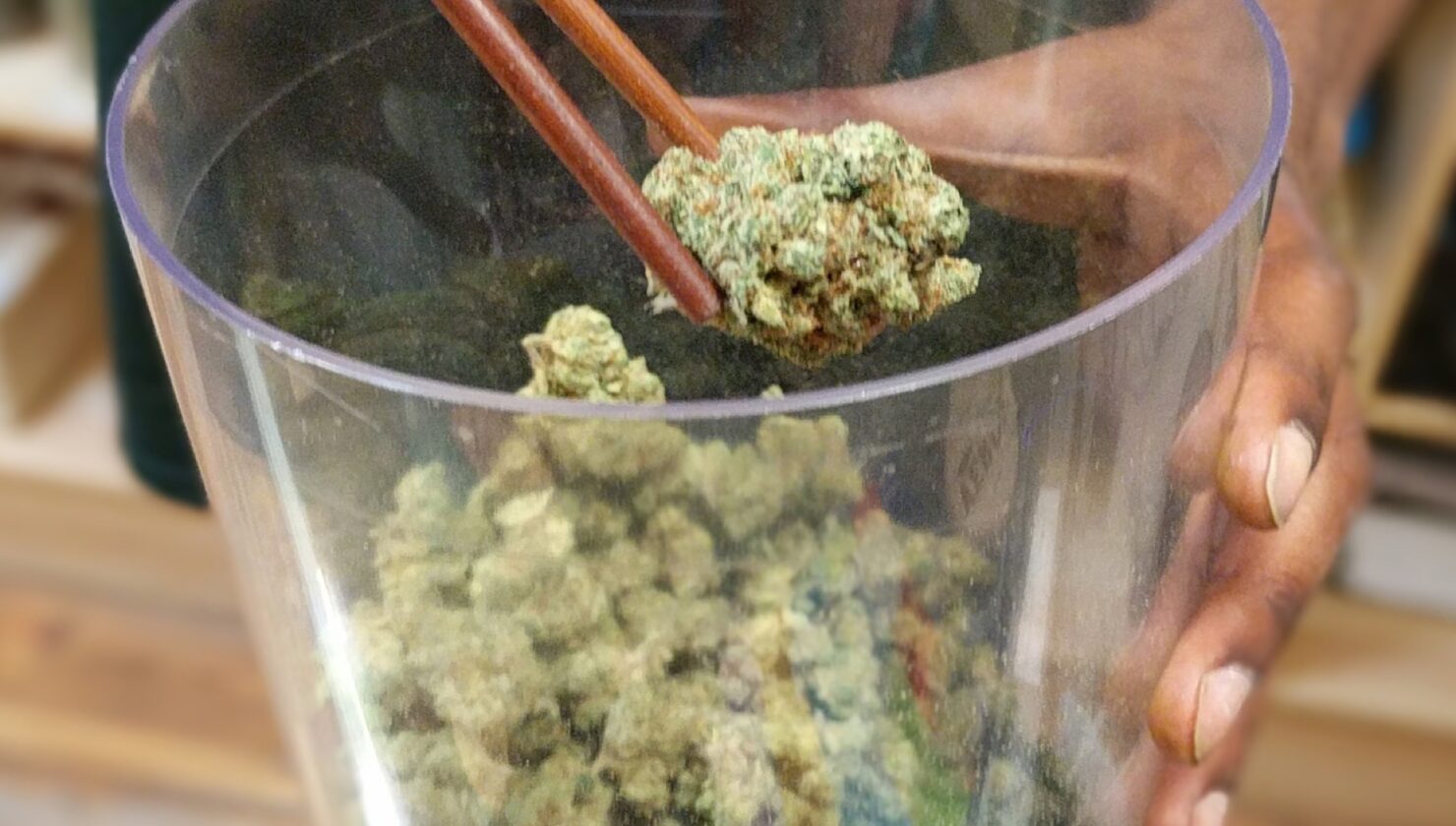
Instead, Coleman is standing behind the counter at KAI Dispensary in Grand Junction.
The road between those two points ran almost entirely through cannabis.
Grand Junction doesn’t fit the image most people carry when they think of Colorado’s cannabis scene. It’s not Denver’s RiNo corridor, with its lush double-dispensary blocks and wellness tourist foot traffic. It’s not Boulder. It sits at the western edge of the state, a high desert city where the Colorado and Gunnison rivers meet, where the oil and gas economy still shapes the political weather, and where the politics of marijuana have always been more complicated than in the urban Front Range.
That context matters for what Coleman is trying to build.
After the crash, after the surgeries, after the months of physical therapy, Coleman found himself confronting the most unglamorous part of serious injury: the nights. Pain management during the day, even incomplete pain management, has a structure to it. There are appointments, exercises, a sequence. The nights are formless. Sleep becomes the enemy and the prize simultaneously. Coleman has said cannabis was what finally let him get through them — not as a cure, but as a bridge that got him enough rest to do the work of healing the next morning.
That experience didn’t make him a philosopher of cannabis. It made him a customer who became an operator.
The mechanics of how Coleman came to own KAI involve a detail that sounds apocryphal but apparently isn’t: he won the dispensary. The specifics of that transfer — whether through a contest, an equity lottery, or some other mechanism that Colorado’s regulatory framework has allowed entrepreneurs to explore — are part of what makes the story unusual in an industry that typically hands ownership to whoever showed up with the most capital in 2010.
Colorado’s cannabis market has matured past its gold rush phase into something more stratified. The state has been one of the longest-running legal markets in the country, and the shakeout has been ongoing for years. Multi-state operators have moved in; small independents have been squeezed by margin compression, competition from licensed delivery, and the continuing overhang of the illicit market, which never went away the way legalization advocates promised it would.
Against that backdrop, a single dispensary in Grand Junction is not a get-rich play. It’s a commitment. It requires someone who believes in the thing for reasons beyond the spreadsheet.
Coleman, apparently, qualifies.
For the Southwest cannabis market broadly, stories like Coleman’s illuminate something the industry’s institutional communications often understate: the product still carries weight for people who came to it out of desperation before they came to it out of curiosity. The recreational framing — the lifestyle branding, the sommelier language around terpene profiles, the self-conscious pivot away from medical roots — serves a real market. But it can obscure what makes the plant durable.
In states like Colorado, Nevada, and Arizona, where legalization has been running long enough to produce genuine market history, the operators who have lasted often share a version of the same story. They came to cannabis because it worked on something that other options weren’t touching. Sleep. Chronic pain. The aftermath of injury or illness. They stayed because they believed other people deserved the same access, and because they knew how to talk to customers who were in the position they’d been in.
That’s not nostalgia. It’s a market insight. The consumer who walks into a dispensary in Grand Junction is not the same as the consumer walking into a flagship Denver store, and pretending otherwise is how operators lose them.
What Coleman is building at KAI is still taking shape. Grand Junction’s cannabis market operates under Colorado’s statewide framework but within a local political culture that has historically been more resistant to the industry’s presence. Western Slope communities have often opted out of retail cannabis entirely; Grand Junction’s position as a city that has opted in makes it something of a test case for whether the industry can build durable legitimacy in parts of the state that weren’t natural early adopters.
The cultivation side of that equation is also in transition. As the industry’s own analysts have noted, the risks in cannabis increasingly come not from the plant itself but from the infrastructure around it — how facilities get built, how equipment gets sourced, how operators plan for a market that can shift faster than a grow cycle. For a single-store operator in a competitive environment, those decisions carry outsized consequence.
Coleman came into this differently than most. He didn’t arrive with a background in retail or agriculture or finance. He arrived with a spine that had been rebuilt and a sleep problem that cannabis helped solve. In an industry that sometimes struggles to articulate why any of this matters, that’s not nothing. It might, in fact, be the whole argument.
KAI Dispensary is open in Grand Junction. Joey Coleman is walking again.
Some things are worth writing down plainly.


Responses