
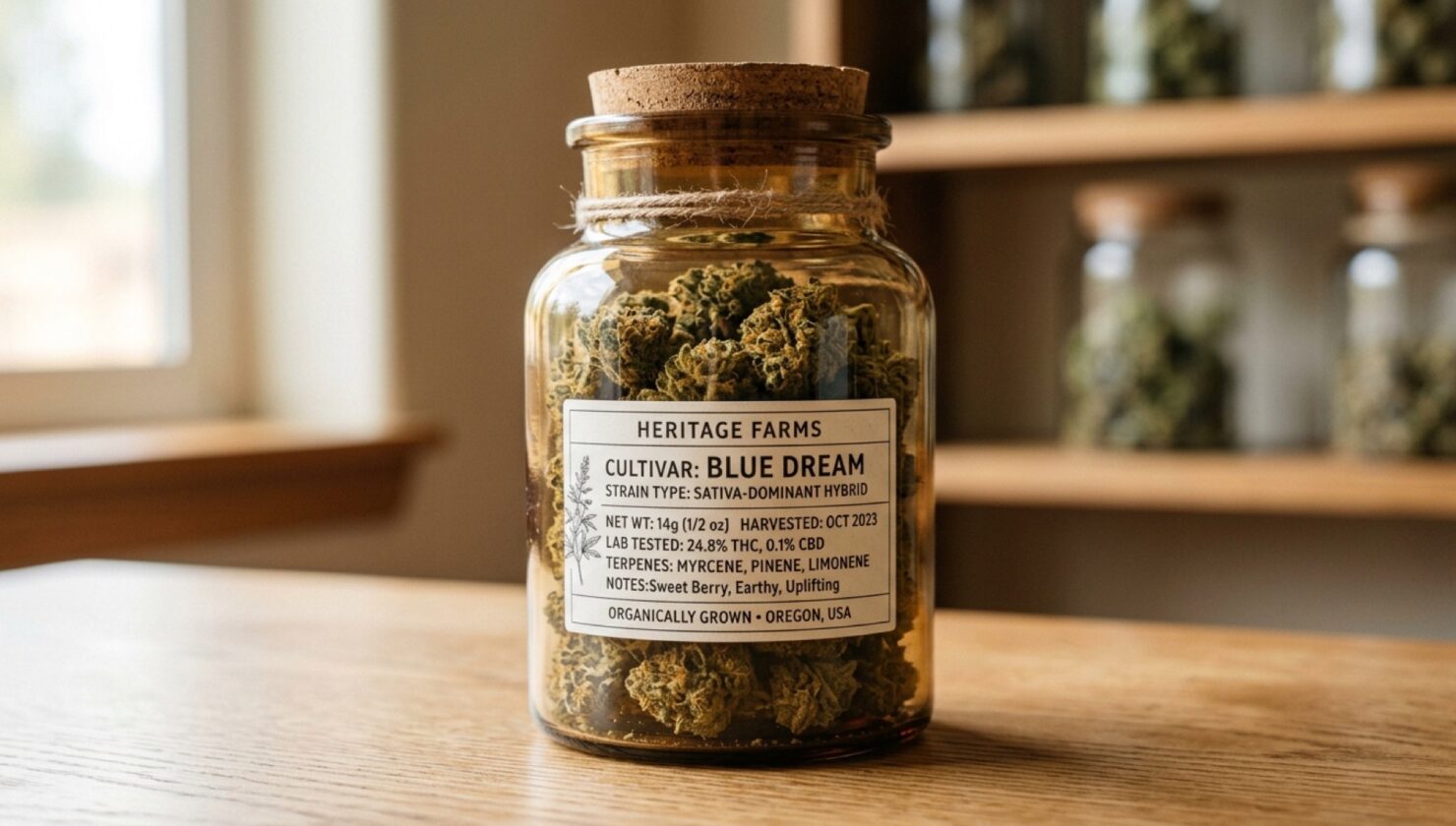
Northeast Consumers Are Done Guessing What’s in Their Weed
Walk into any busy dispensary in Brooklyn, downtown Boston, or along Jersey City’s Journal Square and you’ll hear some version of the same conversation at the counter: Is this tested for pesticides? What’s actually in this? A new study from the Cannabis Industry Journal puts numbers behind those questions — and for growers and retailers operating in the Northeast’s regulated markets, the findings are worth sitting with.
The study, published last week, shows that consumer concern over pesticide residues in cannabis has been growing steadily, and that “clean” positioning — meaning products that are explicitly tested and free of synthetic pesticide inputs — is increasingly what moves product off shelves. The details are sparse in the summary data, but the headline direction is clear: buyers in mature legal markets are no longer satisfied with state-mandated testing as a simple backstop. They want to know the story.
That shift matters especially in the Northeast, where three of the country’s most populous and most recently matured adult-use markets — New York, Massachusetts, and New Jersey — are all competing for the same consumer dollar. Massachusetts has been legal since 2018 and its market is old enough now that early adopter enthusiasm has given way to something closer to discernment. New Jersey, which launched adult-use sales in April 2022 and has been rapidly expanding its retail footprint, is hitting the phase where operators are competing on quality rather than just access. And New York, still working through the slow, complicated rollout of its licensed dispensary network, is watching what’s happening in Boston and Newark and trying to get ahead of it.
In all three markets, pesticide contamination has come up as a real compliance and PR issue — not just a theoretical one. Testing failures and product recalls have happened in each state. When consumers say they want “clean cannabis,” they’re reacting to something concrete.
The timing of this consumer shift is complicated by what’s happening at the federal level. The Trump administration’s 2026 National Drug Control Strategy has flagged synthetic hemp-derived THC products as a target, and the White House has been signaling a crackdown on intoxicating hemp products — the delta-8, delta-9, and THC-O beverages and edibles that have proliferated in the gray zone between the 2018 Farm Bill and state cannabis law. That crackdown is relevant here because those products, which are not subject to the same testing regimens as state-licensed cannabis, have flooded convenience stores and smoke shops across the Northeast, including in Connecticut, Pennsylvania, and Rhode Island, where regulated adult-use markets are either newer or still catching up.
For consumers, the distinction between a state-tested dispensary product and an unlicensed hemp-derived product sitting on a gas station shelf is not always obvious. That ambiguity is part of what’s driving the “clean cannabis” conversation. Buyers who’ve spent $60 on an eighth at a licensed Massachusetts dispensary have reason to expect that product was tested to state standards. But the proliferation of cheap, inadequately tested hemp products in the same general market has made some consumers more skeptical across the board — and has given licensed operators both a challenge and an opening.
The operators best positioned to capitalize on this moment are the ones who can actually tell the story behind their product: what inputs were used, how the grow was managed, what the testing showed. In a market like New York, where many of the licensed dispensaries are still relatively new and still building customer relationships, that kind of transparency is a real differentiator.
Whether the industry responds to that opening is another question. “Clean cannabis” as marketing language is already getting crowded. But the study’s findings suggest the underlying consumer demand is genuine, not just a trend. In the Northeast’s competitive, increasingly sophisticated markets, the operators who ignore it may find out the hard way that their customers have options.
Dana Reeves covers Northeast state cannabis markets for CannabisInquirer.com.



Responses