
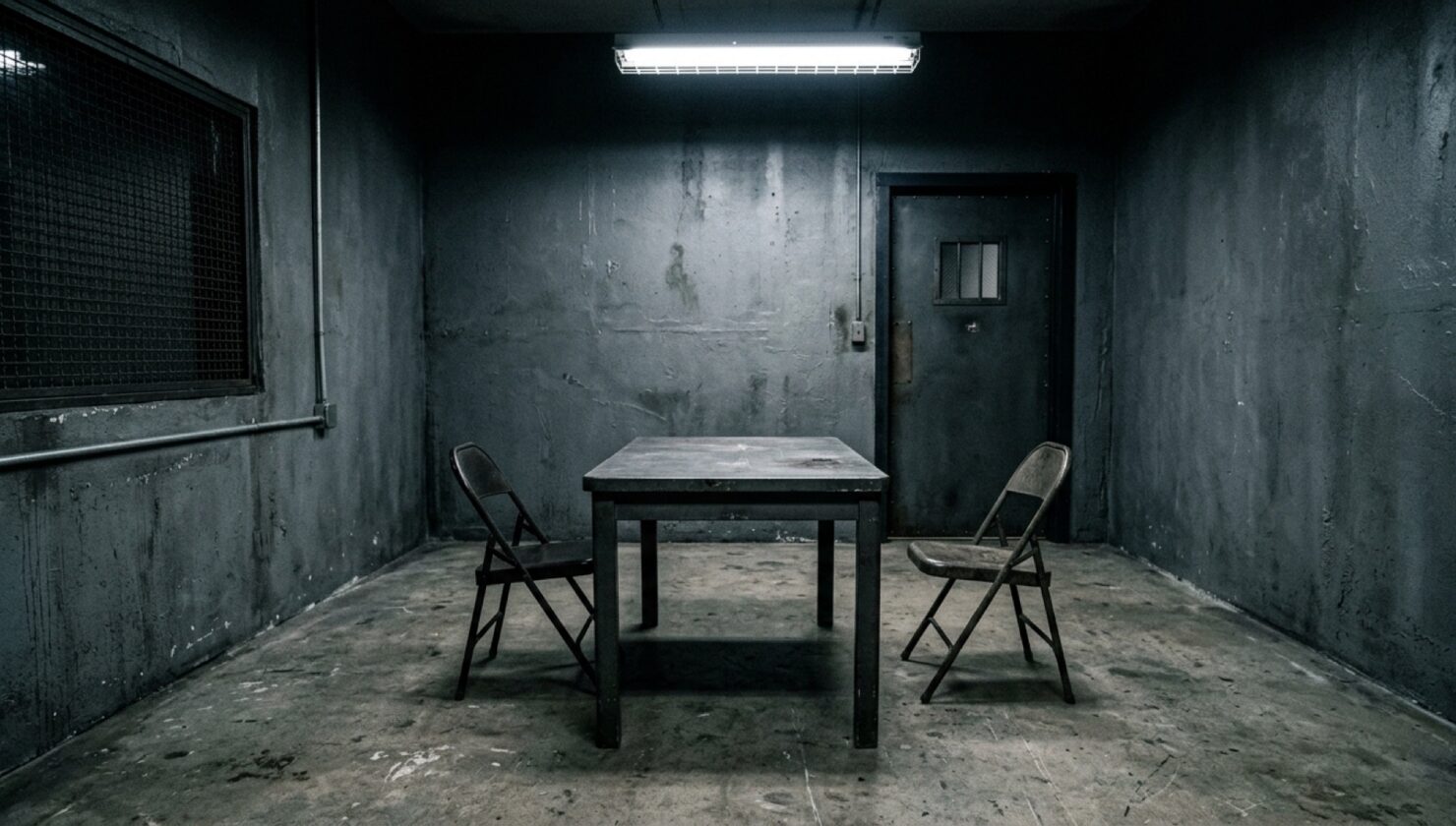
Marcus Bell spent three years building his application for a the equity licensing crisis cannabis dispensary license in Illinois. He put together the business plan, secured a location, lined up investors who believed in him. He checked every box — except one. In 1998, when he was nineteen years old and living in a Chicago neighborhood where the police treated possession arrests like a quota sport, he was caught with a small amount of marijuana. He served no prison time. He paid a fine. He moved on with his life.
Illinois moved on too — straight into a legal cannabis market worth over $1.5 billion a year — while Marcus Bell’s 28-year-old conviction sat in his file like a door wedge, blocking the social equity license that was supposedly designed for people exactly like him. His application has been in administrative review for fourteen months.
“The state legalized it,” he told me over the phone last fall. “They just didn’t legalize it for me.”
What happened to Marcus Bell did not begin in 1998. It began in 1930, in Washington D.C., when a career bureaucrat named Harry J. Anslinger was appointed head of the newly created Federal Bureau of Narcotics, and immediately set about finding a drug to define his career.
Marijuana was barely on the American radar at the time. It was used modestly, unremarkably, associated in much of the country with nothing in particular. But it was becoming associated with something that made it useful to Anslinger: Black people and Mexican immigrants. As Mexican laborers arrived in the Southwest in greater numbers after World War I, their cultural practice of smoking cannabis arrived with them. In the South and in urban North, cannabis was woven into Black jazz culture. These associations — not any pharmacological finding, not any credible scientific evidence — became the engine of prohibition.
Anslinger was not subtle about this. He called marijuana “the most violence-causing drug in the history of mankind.” He told anyone who would listen that “you smoke a joint and you’re likely to kill your brother.” He maintained files — he called it his “Gore File” — stuffed with lurid stories of murders he attributed to cannabis, almost all of them involving Black or Latino perpetrators. He told newspapers that jazz musicians were seducing white women with marijuana. He used the word “reefer” as a racial dog whistle before that phrase existed.
A compliant press corps — led in large part by William Randolph Hearst, who had his own financial reasons to demonize varies by state nationwide. The American Medical Association protested, for what it was worth. No one listened.
The law was not built on science. It was not built on public health data. It was built on the deliberate, documented decision to associate a drug with racial minorities and then criminalize the drug.
In 1969, the Supreme Court declared the Marihuana Tax Act unconstitutional in Leary v. United States, a case brought by Timothy Leary. The win lasted approximately one year.
In 1970, the Nixon administration replaced the Marihuana Tax Act with the Controlled Substances Act, which placed marijuana in Schedule I — the most restrictive classification, reserved for substances with “no accepted medical use” and “high potential for abuse.” It put cannabis alongside heroin. It is where cannabis remains today.
Nixon’s motivations were not secret. They were confessed.
John Ehrlichman, Nixon’s domestic policy chief, told Harper’s Magazine in 2016 what those of us who covered the drug war already suspected. “We knew we couldn’t make it illegal to be against the war or Black,” he said, “but by getting the public to associate the hippies with marijuana and Blacks with heroin, and then criminalizing both heavily, we could disrupt those communities.” He added: “Did we know we were lying about the drugs? Of course we did.”
It is worth sitting with that sentence. The architects of the War on Drugs — launched by Nixon in 1971 and supercharged by every subsequent administration through the 1990s — knew they were lying. They did it deliberately, as a political weapon, aimed at communities of color and political dissidents. And then they built an enforcement apparatus that lasted fifty years.
The arithmetic of what followed is not complicated, but it should be stated plainly.
Black Americans are 3.73 times more likely to be arrested for marijuana possession than white Americans, according to ACLU data — despite using cannabis at virtually the same rates. In some counties, the disparity exceeds eight-to-one. The War on Drugs did not happen randomly. It happened in specific zip codes, enforced by departments with specific priorities, producing convictions that landed in specific files.
Those files followed people.
Today, millions of Americans carry marijuana convictions that make them ineligible for federal student loans, public housing, professional licenses, and in some states, voting rights. The legal cannabis industry — now a $35 billion market — is largely inaccessible to the communities it was built on the backs of. Social equity licensing programs in Illinois, California, and New York were designed to correct this. They have largely failed, strangled by bureaucratic bottlenecks, capital requirements that equity applicants cannot meet, and application processes that take years while better-capitalized competitors dominate the market.
Federal Schedule I classification compounds everything. It blocks VA physicians from recommending cannabis to veterans — even as prescription opioids remain freely available. It limits federally funded research. It keeps cannabis businesses, disproportionately owned by Black and Latino entrepreneurs, from accessing basic banking services. The CLIMB Act, introduced this year, would begin to address cannabis lending equity. It has not moved.
The person who can’t get a dispensary license because of a 1998 possession conviction is not a casualty of a policy that went wrong. He is the intended product of a system that worked exactly as designed — first by Anslinger, then by Nixon, then by every Congress that declined to fix it.
There are reasons for guarded optimism. Forty-seven states have some form of legal or decriminalized cannabis. expungement bills have passed in a growing number of states — though most apply automatically to only a fraction of convictions, and many require people to petition individually, a process that requires lawyers, time, and a faith in the system that the system has not earned. The MOCA Act, which passed House Judiciary subcommittee in March, would deschedule marijuana federally, expunge federal convictions, and create an equity reinvestment fund. It faces long odds in the full House.
DEA rescheduling to Schedule III — a lesser step — has been in administrative limbo for over a year. Even if it happens, it would not open the VA, would not resolve banking, and would not expunge a single conviction.
Reform advocates have a word for this: incrementalism. It is not a compliment.
What justice actually requires is not complicated, even if it is politically inconvenient.
It requires automatic, universal expungement of marijuana possession convictions — not petition-based, not county-by-county, but federally mandated and retroactive. It requires removing barriers, not creating new ones, for equity applicants in every state. It requires descheduling, not rescheduling, so that veterans can access the medicine their own doctors want to recommend, and so that researchers can study a plant that 54 percent of Americans have used without the blessing of a DEA Schedule I waiver. It requires the banking access that every other legal industry takes for granted.
None of this is radical. All of it is overdue.
Marcus Bell’s application is still under review. Somewhere in a government database, a 28-year-old arrest record — for a substance his own state now licenses and taxes — is being weighed against his fitness to participate in the industry that grew from its criminalization.
Harry Anslinger has been dead since 1975. His war is still running.
Maya Torres covers the human side of cannabis policy for CannabisInquirer.com. Tips and source inquiries: maya@cannabisinquirer.com
Related Stories


Responses