
The Senate Voted 92-4 to Unlock Cannabis Research. The House Still Hasn’t Moved.
S.1876 is one of the most bipartisan bills in Cannabis Inquirer’s legislative tracker. It’s also sitting completely still.
By Ethan Vale | March 27, 2026
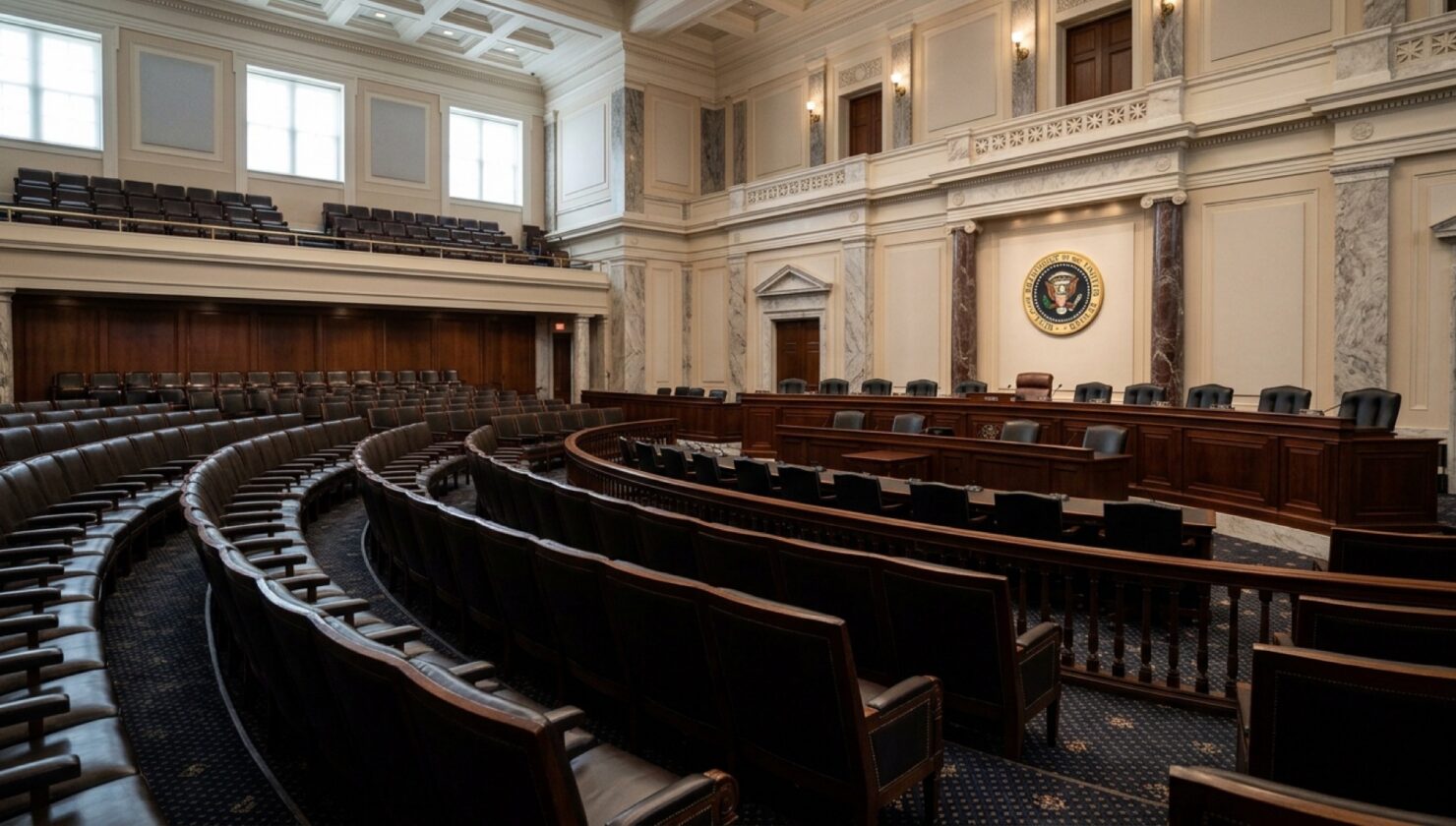
On February 22, the United States Senate voted 92-4 to pass the Cannabidiol and Marihuana Research Expansion Act Reauthorization — a bill designed to strip away the bureaucratic barriers that have made studying cannabis one of the most obstructed research endeavors in American science. Ninety-two senators agreed. Four opposed.
That level of bipartisan alignment is nearly unheard of in the 119th Congress. Senators who disagree on the budget, the border, and the composition of the Supreme Court agreed on this. And yet the House has done nothing with it for 33 days.
What This Bill Actually Does
S.1876 doesn’t legalize cannabis. It doesn’t reschedule it. What it does is address something more immediately tractable and arguably more consequential in the short term: it makes studying cannabis a practical possibility for researchers who currently face a bureaucratic gauntlet that no other drug class encounters.
Under existing federal law, any researcher who wants to study cannabis must obtain a Schedule I researcher license from the DEA — a process that can take years, involves facility inspections subject to DEA scheduling (not scientific priority), and requires sourcing study material from federally approved cultivators whose product has historically borne little resemblance to what patients actually consume. The mismatch between the government’s cannabis supply and the commercial market has rendered some study results nearly impossible to generalize.
S.1876 changes three things:
First, it imposes hard timelines on the DEA licensing process. The agency currently has no statutory obligation to act on applications within any set period. That ends.
Second, it allows FDA-approved clinical trials to source cannabis from state-licensed producers — meaning researchers can study the actual products patients use, not federally grown approximations.
Third, it removes a redundant layer of inter-agency review that has historically delayed research project approvals by 18 months or more without producing any scientific benefit. The reviews were process, not protection.
In plain English: scientists who want to study whether cannabis treats PTSD, chronic pain, or epilepsy will no longer have to wait two or more years just to begin.
Who It Affects
The most immediate beneficiaries are researchers. As of early 2026, more than 900 applications for Schedule I research licenses were pending at the DEA. Many of those researchers submitted applications in 2022. S.1876 doesn’t retroactively move them forward — but it establishes a framework under which this backlog cannot recur.
Veterans are the second-order story, and it’s an important one. The VA currently prohibits its physicians from recommending cannabis even in states where it is fully legal. The VA’s stated justification, repeated at congressional hearings, is the insufficient clinical evidence base for cannabis therapeutics. That evidence base is thin — in significant part because federal research barriers have made rigorous trials difficult to conduct. S.1876 begins to close that circular logic. You cannot cite insufficient evidence as justification for restrictions that prevent the collection of evidence.
Pharmaceutical companies with cannabis-derived research pipelines — particularly in epilepsy, oncology, and neurological pain — would also see timelines compress for FDA approval pathways. Several companies have publicly noted that DEA delays, not scientific uncertainty, are the primary bottleneck on their development schedules.
And then there are patients. Improved research produces improved evidence. Improved evidence produces more physician confidence. More physician confidence produces more treatment options. That chain is currently broken at the very first link.
The Direction
This bill expands access — not to cannabis itself, but to the scientific infrastructure that would make better-informed cannabis policy possible. That framing is deliberate. S.1876’s sponsors understood that a research bill that doesn’t touch scheduling or retail access is far harder to vote against than one that does. The 92-4 vote reflects the success of that construction.
The bill is part of a broader congressional pattern: narrow, technically defensible cannabis measures moving with genuine bipartisan support while comprehensive proposals — the MOCA Act, the States Reform Act, even the SAFE Banking Act — remain gridlocked in political trench warfare. The research bill moves because it doesn’t threaten the political architecture that has sustained prohibition. It simply asks whether that architecture can be defended scientifically.
In many cases, it cannot. That’s what the research would likely show. Which is worth noting when assessing who might actually want to prevent this bill from moving.
What Happens Next
The bill requires a House floor vote. As of March 27, House leadership has not scheduled one.
Two paths exist. The first is a standalone vote — unlikely without sustained pressure from House leadership or the committee chairs who control the floor calendar. The second is attachment to a larger legislative vehicle: a possible FDA reauthorization package, an appropriations rider, or an omnibus. The spring appropriations cycle creates a window. Whether that window stays open depends on whether House leadership decides to use it.
The Senate’s 92-4 margin is not politically irrelevant here. In a House that regularly struggles to pass noncontroversial measures, a bill endorsed by 47 Republican senators carries significant cover for House Republicans inclined to vote yes. A House member who votes against it would need to explain why they oppose the ability to conduct research that 92 of their Senate colleagues approved.
If the bill clears the House, the administration is expected to sign it. No veto signals have emerged.
The most realistic obstacle isn’t active opposition — it’s the quieter power of inaction. Each month the bill sits, researchers in DEA queues fall further behind. For patients enrolled in trials that may never get approved, procedural delay is not an abstraction. It is a fact of life.
Who’s Behind This
Sen. Dianne Feinstein (D-CA) — the bill’s primary Senate sponsor, with a track record on FDA oversight and criminal justice policy that spans three decades. Feinstein has never been a legalization advocate, and S.1876 is consistent with that: she has long maintained that Schedule I’s research restrictions are scientifically unjustifiable even if the policy question of legalization remains contested. Her position is coherent and on record.
The four opposing senators — their identities have not been made publicly prominent in floor statements or subsequent press releases. This is, by itself, notable. The bill carries no fiscal cost, creates no new regulatory burden on states, and takes no position on scheduling. Voting against it is a position that requires an explanation none of the four have offered publicly.
Speaker Mike Johnson (R-LA) — has not committed to scheduling a House floor vote. Johnson’s record on federal cannabis reform is one of consistent skepticism, rooted in a social conservative framework that has not materially shifted. His calculation here is political: does he have more to lose by scheduling a vote and dividing his caucus, or by blocking a bill that 47 Republican senators just voted for? He hasn’t answered that yet.
Research advocates — NORML, the Multidisciplinary Association for Psychedelic Studies, and academic researchers at Johns Hopkins, UC San Diego, and the University of Colorado have all lobbied in support of S.1876. Their argument is structurally simple: evidence-based drug policy requires the ability to gather evidence. The current federal framework makes that gathering unnecessarily hard. This is not a contested empirical claim among people who have actually tried to run cannabis studies.
The Bottom Line
The Senate agreed, 92-4, that it should be easier to study cannabis. That’s not a narrow partisan position — it’s a near-consensus. The House can schedule a vote and extend that consensus into law, or it can allow the bill to expire through inaction while DEA license queues grow and clinical trials wait. There is no scientific argument for the latter. There may be a political one. But no one in Congress is making it out loud — which tells you something about how strong that argument actually is.
Related Stories



Responses